What Your Aura Score Is Actually Telling You
A number is where the conversation starts. Here's how to read the bars behind it and what to change first.

Getting a number feels great when it's high and personal when it's low. Neither reaction helps. The score is useful for one reason: it tells you where to look next.
Every Oryva check covers four zones: top wear, bottom wear, accessories and footwear. The read comes back across three bars. Here's how we'd use them.
Start with the lowest bar
You're not fixing everything before you leave the house. Find the weakest bar, change one thing that moves it, and ignore the other two for now. One good swap almost always beats a full outfit change, and it means you still make it out the door.
Color Harmony
This asks whether your colors work together and whether they work with you, since Oryva factors in your skintone. A low bar usually means too many colors competing for attention, or one that's washing you out near your face.
It's also the cheapest bar to fix. Lose one color, or repeat one you're already wearing in a small dose, like a cap that picks up the shade in your sneakers. Our color guide walks through the moves.
Silhouette Balance
This is about shapes and proportions: how wide, how long, and where your outfit breaks. A low bar often comes down to a top that's too long, a hem that's fighting your shoes, or volume everywhere with nothing to anchor it.
Most fixes here are free. Tuck the front. Cuff the jeans. Push the sleeves. We wrote a whole story on this because it does the most for the least money.
Trend Alignment
This one measures how close your fit sits to what's current. It's also the only bar you have permission to ignore.
A low trend score on a fit you love is a preference, not a flaw.
If you've spent years building a look that doesn't care what's happening this season, keep going. Use this bar when you want to feel current, and skip it when you don't.
Give it a fair photo
The read is only as good as what it can see. Before you scan:
- Get your whole body in. Shoes included. Cropped feet means an incomplete read.
- Find real light. Facing a window beats a yellow overhead bulb, especially for color.
- Stand normally. Skip the quarter turn. Scan the fit people will actually see.
- Clear the background. A chair full of clothes gives the fit competition.
Watch the direction
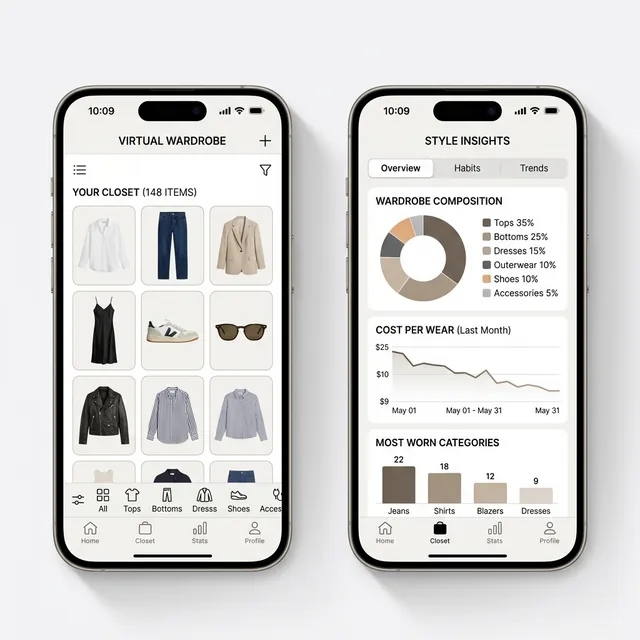
One score is a snapshot. The more useful signal is the line over time. Every fit you check lands in your Virtual Wardrobe automatically, and the Monthly Report on the 1 Month and 3 Month plans shows your aura growth, so you can see whether you're improving or just having a good Tuesday.
And the score has no idea where you're going. A fit for a wedding and a fit for a coffee run want different things. You're still the one getting dressed. Oryva is the second opinion.